Artist spotlight
Angèle Etoundi Essamba: the photographer who put the Black female body in African art's early canon
A Cameroonian-Dutch photographer with a MoMA acquisition, a national pavilion at Venice, and three galleries behind her today, and still no valuation or index entry in Okasen's data. That gap is the story.
September 27, 2026 · Okasen Research
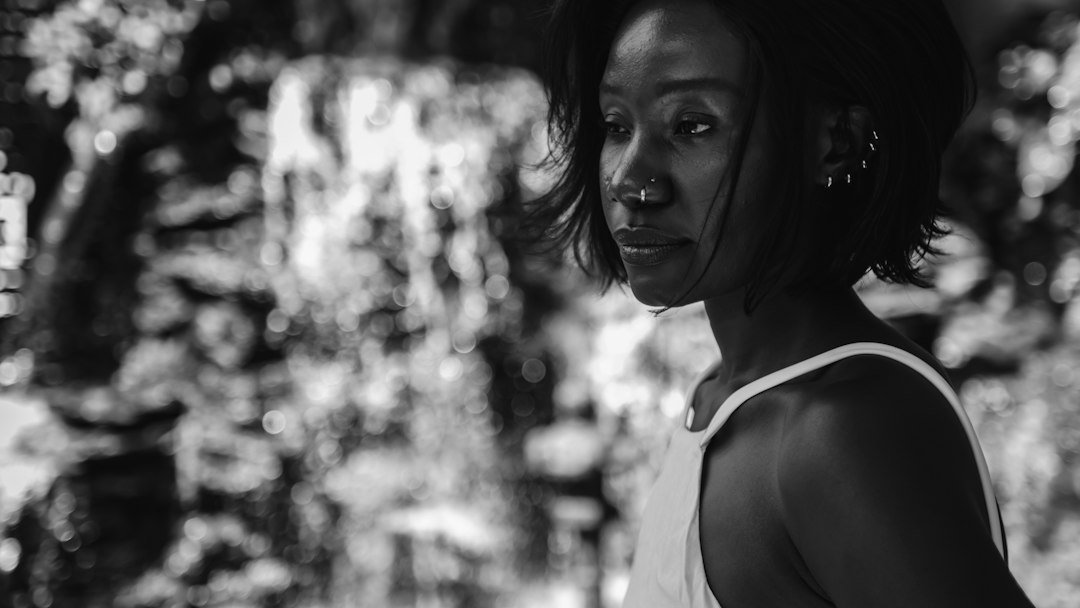
Photo by Lisa Marie Theck on Unsplash
Angèle Etoundi Essamba: the photographer who put the Black female body in African art's early canon
Angèle Etoundi Essamba has been photographing African women in black and white for four decades, and the work hasn't stopped moving. A survey of her portraits closed out the "Art of Transformation" showcase in Opa-locka, Florida in December 2025. Three galleries, across two countries, currently list her as a represented artist. None of that shows up yet in Okasen's market data. That gap is the actual story here.
Who they are
Angèle Etoundi Essamba was born in 1962 in Douala, Cameroon. She left for France around age ten, then settled in Amsterdam, where she trained at the Nederlandse Fotovakschool, the Dutch professional school of photography, graduating in the mid-1980s. She still lives and works there. Her first show opened in 1985, at Gallerie Art Collective in Amsterdam. Since then her photographs have appeared in more than 200 exhibitions and over 50 publications, nearly all of them built around the same subject: African women, shot in black and white, photographed, in her own framing, "beyond stereotypes."
The institutional record came early and kept coming. In 2016 the President of Cameroon named her a Knight of the National Order of Valour. In 2022 she represented her country at its first-ever national pavilion at the Venice Biennale, "The Time of the Chimeras," one of four Cameroonian artists shown alongside four international peers from April to November that year. Her prints now sit in the permanent collections of the Museum of Modern Art in New York and the National Museum of Women in the Arts in Washington, DC. In 2009 she founded the Essamba Home Foundation, which mentors street girls in Cameroon.
Recommended for you
industry note
Why Some African Paintings Can't Legally Leave the Country They Were Made In
industry note
8,069 emerging artists, 319 verified. Here's what separates them
market commentary
A William Kentridge Just Sold for R119,550. That's the Budget Entry Point Nobody Talks About
market commentary
OKN South Africa is up 20.65% this year. Half its recent sales went for under R10,000